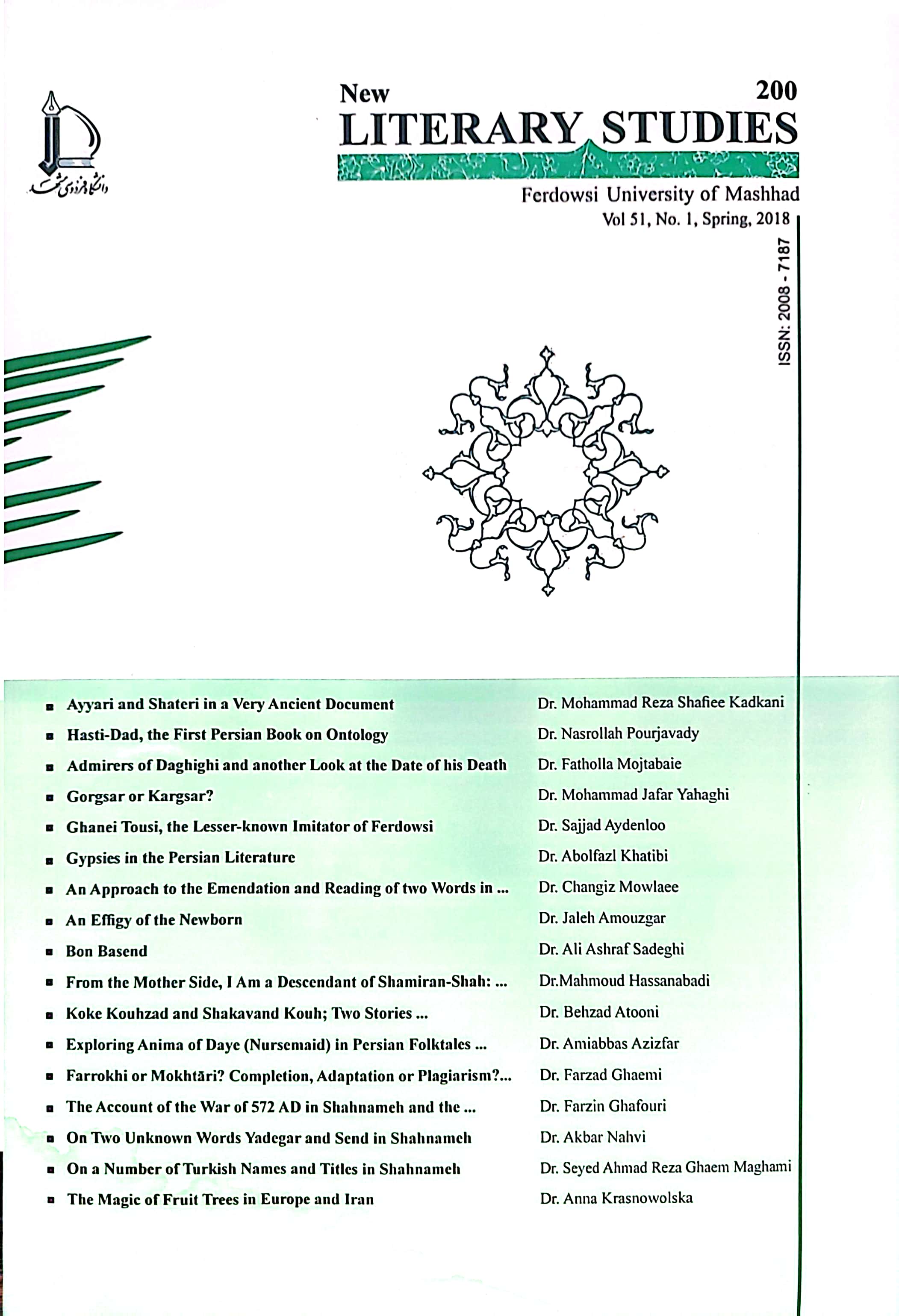
New Literary Studies

New Literary Studies

Keywords Cloud

  • Shahnameh
  • Myth
  • Ferdowsi
  • Literary genre
  • textual criticism
  • Epic
  • manuscript
  • Rhetoric
  • critical discourse analysis
  • criticism
  • Discourse analysis
  • Literary criticism
  • correction
  • Ferdowsi’s Shahnameh
  • Shāh-nāmeh
  • Shāh-nāme
  • stylistics
  • codicology
  • Rumi
  • khodaynameh
  • Ideology
  • Poetry
  • Rostam
  • gender
  • Plagiarism
  • feminism
  • Persian language
  • Iran
  • interpretation
  • narrative
  • Shāhnāma
  • satire
  • archetype
  • Structure
  • comparative study
  • demon
  • Shahname
  • \"
  • Ferdowsi\'s Shahnameh
  • discourse
  • Marzbannameh
  • Ferdowsi University of Mashhad
  • polyphony
  • Transformation
  • Quatrain
  • Nezami
  • Adaptation
  • contemporary poetry
  • Culture
  • creation myth
  • intertextuality
  • Audience
  • Zoroastrian
  • the Shāhnāma
  • Theory
  • Mathnawi Manavi
  • identity
  • fertility
  • Fairclough
  • Ontology
  • Essay
  • Women
  • letter
  • Shafiei Kadkani
  • Mahmoud DowlatAbadi
  • Iranian Dialects
  • Pathology
  • Iranian culture
  • Hypertext
  • Letter writing
  • critical edition
  • Genette
  • Sohrab Sepehri
  • mythology
  • imitation
  • Samak-e Ayyar
  • mapping
  • Saadi
  • Darabnameh
  • edition
  • History
  • metaphor
  • Dialogism
  • Figures of Speech
  • Maslow
  • Folklore
  • Comparative literature
  • Bahram
  • Ferdowsi\'
  • magic
  • Ferdowsinameh
  • Focalization
  • Shāh-nāma
  • Farrokhi
  • Mithraism
  • Parthians
  • Tārikh-e Bayhaqi
  • simin Daneshvar
  • Shāhnāmeh
  • Islamic mysticism
  • Semiotics
  • Hafez
  • the Shahnameh
  • Hormazd
  • Mystical Experience
  • Postmodernism
  • patriarchy
  • Story
  • irony
  • Mehregan
  • Islamic rhetoric
  • Shahnama
  • didactic literature
  • Shahnameh Ferdowsi
  • Masnavi
  • desire
  • Kateb
  • Alexander
  • Subject
  • persian poetry
  • Theoretical criticism
  • Modernity
  • charisma
  • Iranshahri
  • articles
  • manuscripts
  • narration
  • Sanā\'ī Ghaznavi
  • Nowruz
  • paratext
  • conceptual metaphor
  • genre
  • Rumi\'s Masnavi
  • Legitimacy
  • Hypotext
  • characterization
  • setting
  • epic poetry
  • Saba Kashani
  • Si Morgh
  • Hunting Poetry
  • Shahriār-nāma
  • s Kingdom
  • gain
  • Sufis’ Register
  • Shateri
  • enemy
  • Safavid Bureaucrats
  • Comparative
  • The Decline of Colonel
  • Critical discourse
  • Literary commitment
  • Worksong
  • Amir Arsalan Namdar
  • cognitive metaphor
  • Prometheus
  • Boundary Situations
  • Khosravany
  • Parody
  • Daneshvar
  • tīγ-e-dožam
  • integration of discourses
  • Arthur Rimbaud
  • Story of Rostam and Sohrab
  • Intoxication
  • Recording and Description of the Couplets
  • Military jargon
  • prose stylistics
  • Attar
  • \"Pishine\" sea
  • Iranian woman
  • Friday
  • Figures of Thought
  • Mongol-Turkic Epic
  • implied author
  • Baha-e-valad
  • Ibrahim ibn Adham
  • Analogical Correction
  • mūš. Pairīkā
  • Novel
  • Bon Gosal
  • Sun
  • life and personality
  • Pach-ye Rikhte
  • Sahl Momtane
  • Allegory
  • pairīkā
  • Justice
  • Madness
  • paranoid disorder
  • Revolution
  • \"Kafour-e Fansur\"
  • Poetic Messages
  • Yadgar
  • proverb genres
  • Indian style
  • Nushāfarin nāme
  • Dialect
  • Sufi prose texts
  • Concept of Art